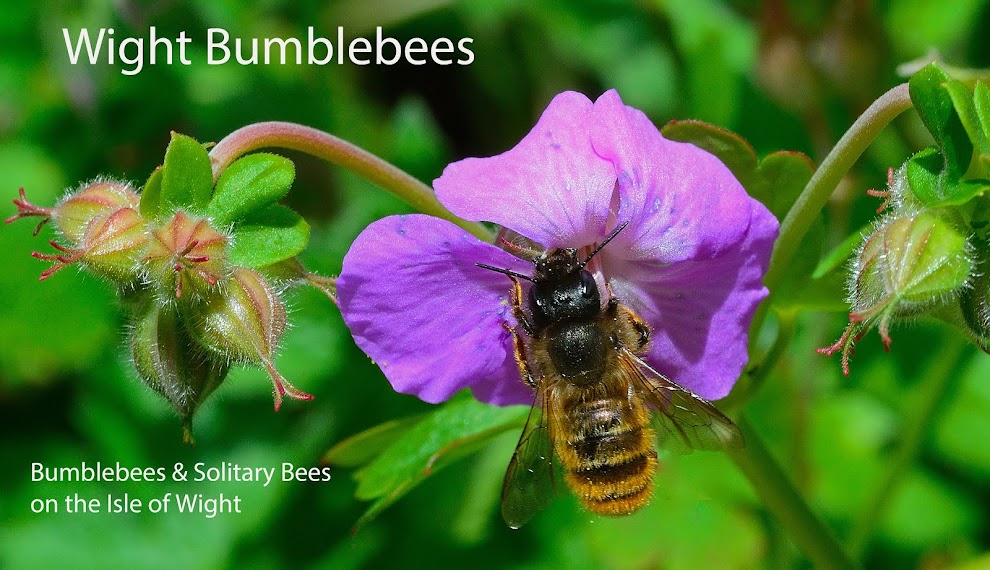
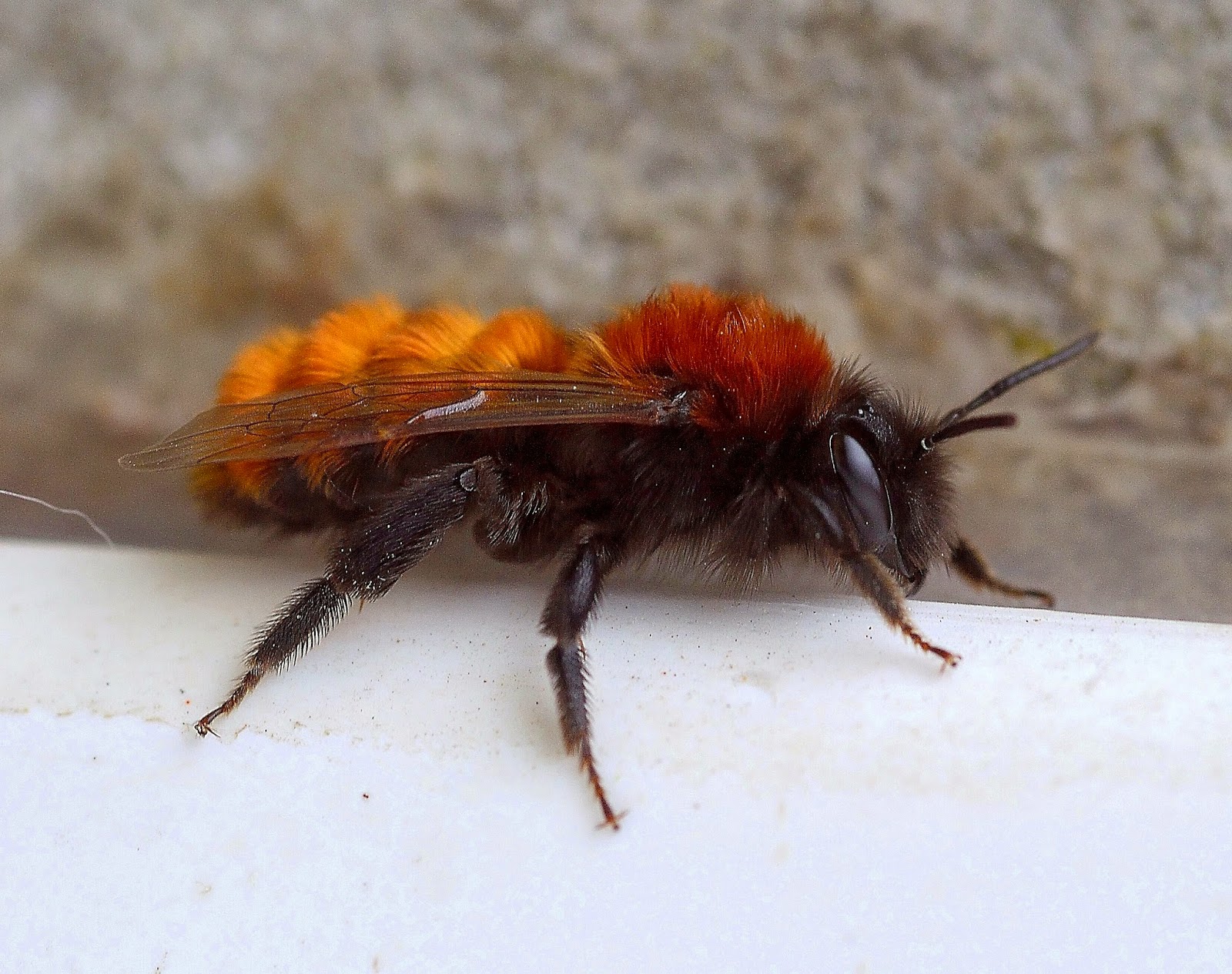
Although locally common in southern England and Wales this solitary bee is not a species that we see all that often on the Isle of Wight.This female is certainly a beautiful bee and she landed at my front door this afternoon.This is the first I have seen of this species Andrena fulva and hopefully now that our fruit trees are in full bloom there will be more in the garden.
Title Photo
A male Red Mason Bee at Freshwater Bay.
Sunday, 26 April 2015
Saturday, 18 April 2015
Lasioglossum at Home.
There are many Lasioglossum species and identification is usually difficult without close examination.Therefore I am unsure of this particular species but the sight of numerous bees coming going at their nest site on a sandy but grassy bank of my local pond was a treat.
Despite being a solitary bee the Lasioglossum excavate their individual nest holes in loose colonies and hence can be known as mining bees or sweat bees.
Thursday, 16 April 2015
A Tiny Piece of Spring Colour.
Spring has definitely arrived now and solitary bees are out in numbers and pollinating all the fresh new blooms.One bee that is unmistakable is the colourful Gold-fringed Mason Bee,Osmia aurulenta.
Tuesday, 14 April 2015
Mission Impossible.
Perhaps this Common Carder Bee is being somewhat optimistic is its attempt to get to the nectar on this tulip in my garden.
Monday, 13 April 2015
Springtime Hots Up.
With the settled weather we are enjoying here at present, spring has certainly got underway with lots of activity in my garden.Now that many of the spring plants and shrubs are beginning to bloom I have seen quite a few bumblebee species.Solitary bees are appearing regularly around the garden and I was pleased to see several probable male Grey-patched Mining Bees,Andrena nitida, vying for a sunny spot on one of our small trees.The male can be identified from the female by the light coloured hairs on the face which are normally absent in the female.
Saturday, 11 April 2015
A Hairy Foot on the Rosemary.
Our flowering Rosemary is proving quite an attraction for various bees now and this afternoon it received a lot of attention from a male Hairy-footed Flower Bee,Anthophora plumipes.
This species of bee is common in the south of England with the male usually appearing before the female in February or March.
Wednesday, 8 April 2015
Pondside Pollinator.
This female Grey-patched Mining Bee,Andrena nitida,was seen busily nectaring on the flowers of marsh marigolds that surround my garden pond.This species is found in southern England from April to June and nests in short to medium length grassland.
Subscribe to:
Posts (Atom)


