Title Photo

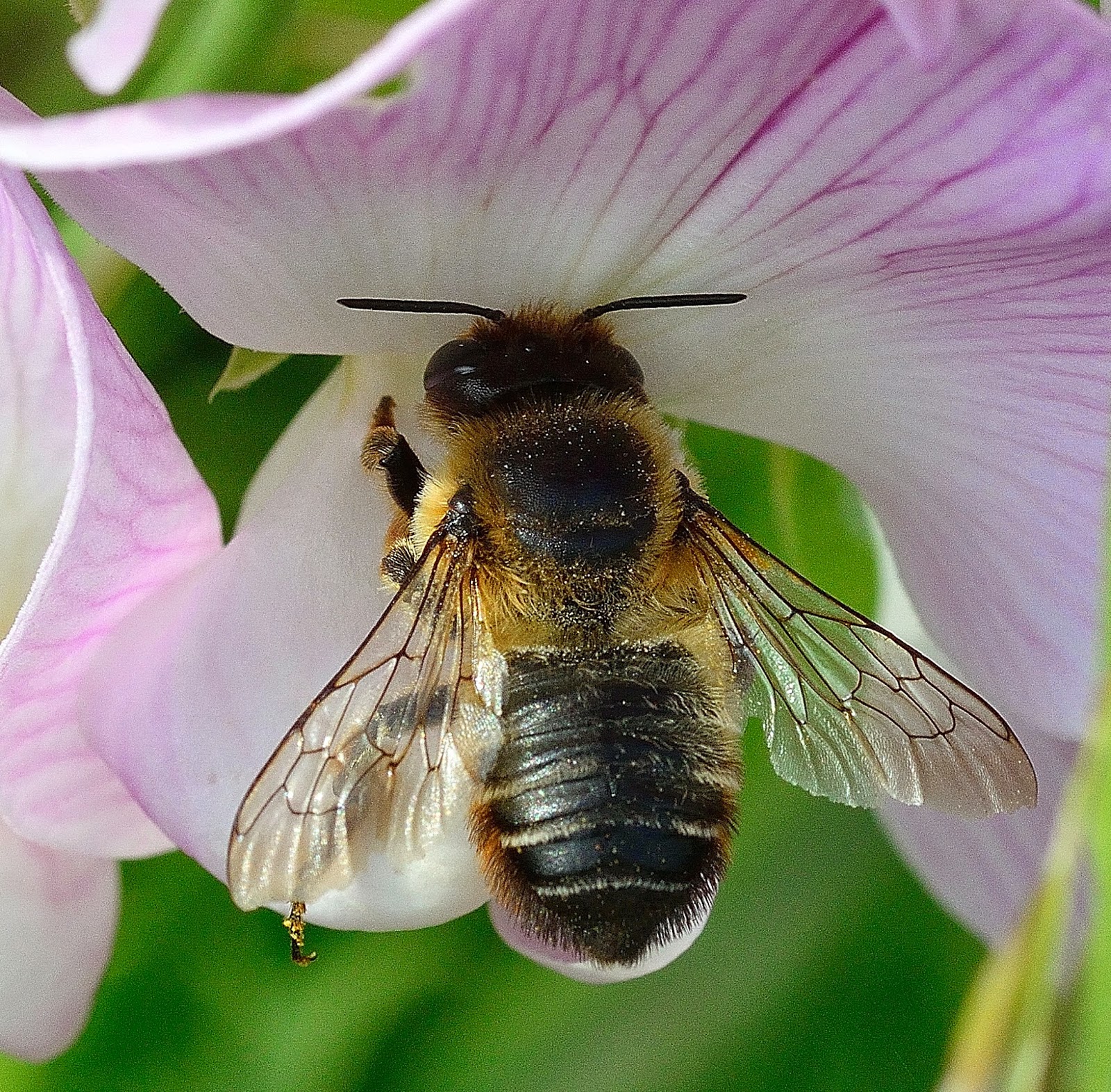
A male Red Mason Bee at Freshwater Bay.
Showing posts with label Honeybee. Show all posts

Friday, 11 December 2015

Pine Honey.

While on holiday to the north-eastern  Aegean Island of Thassos a visit was made to the Beekeeping Cooperative where the honey is processed and refined. It receives honey from over 100 family-run independent producers who are  renowned for their dark caramel coloured pine honey.To give this honey it's delicious taste the bees feed on a white fungus that lives on the local pine trees, as pictured below.This fungus is available to the bees in August so it therefore prolongs the honey making season. The white cotton-like waxy secretion is made by an insect called Marchalina hellenica.     


Once taken from the hive the honeycombs are scraped to remove the caps made by the bees to seal each cell. The frames are then placed in an extractor to separate the honey from the comb by spinning, which forces the liquid to the sides of the machine.Gravity then allows the honey to fall to the bottom of the extractor for collection.
After the honey is extracted,it is heated to aid the process of straining.This removes any remaining pieces of wax and any other particles.Finally the honey is bottled and labelled for sale, either to visitors on the premises or for distribution all over the Island and mainland Greece.      


Thursday, 5 March 2015

Start of the New Season.

Now that the weather has become warmer and with the temperatures rising nicely the first Honeybees are buzzing around the garden in the sunshine.There are several hellebore plants in flower and  they are proving to be very popular with the Honeybees and a queen Buff-tailed bumblebee.
My first siting of the Buff-tailed was on the 21st February during a brief mild spell when I saw her with full pollen sacs.No doubt she was just out of hibernation and collecting supplies of pollen for her new nest.


Tuesday, 2 December 2014

Late Visitors.

The last couple of days of November were mild and sunny on the Island and it brought out the bees to feed on the mahonia which is flowering in our garden.This queen Buff-tailed Bumblebee,Bombus terrestris, is a late in the year visitor.
Another bee enjoying my mahoina was the Honeybee,Apis mellifera. Our native honeybee is active all the year round as the workers ensure that enough pollen is collected to provide honey in the hive for the colony to sustain it through the winter.Of course when conditions are suitable and flowers available the bee will collect more pollen at any time.


Wednesday, 3 September 2014

In my Local Copse.

The warm and sunny weather returned today and many insects were enjoying the drifts of Common Fleabane,Pulicara dysenterica, that are now covering the open paths of my local copse.
The Honeybee,Apis mellifera,in particular, is fond of fleabane and they were out in force collecting 'basket fulls' of pollen.Known as the Western or European Honeybee it is our only native honeybee species.
Several  bumblebee species were also out and about including the Red-tailed Bumblebee on Field Scabious and Thistle.The following photographs show a male Red-tailed,Bombus lapidarius.


Friday, 1 August 2014

Leaf-cutter Bee.

The Leaf-cutter Bee,Megachile, nests in dead wood,holes in plant stems,cliffs,and old walls.They cut out discs of leaves,particularly from roses,and glue them together using saliva to build cells in which their larvae live
The Leaf-cutter Bee can be seen from late spring to August and feeds solely on pollen and nectar.
This bee could be mistaken for a Honey Bee although the underside of the abdomen is orange.There are seven extant species of leaf-cutter bee in the UK which are very difficult to tell apart.It is a common species in the south of England.
The male does not collect pollen and the following photos are of a female.They collect pollen in pollen baskets that are situated on the underside of the abdomen.

.


i
.

Saturday, 22 March 2014

Garden Visitors

Along with the early flowering Hellebore we have a Barberry in our garden which is just bursting into bloom.It is a magnet for all kinds of insects,especially bees. Today's visitors to the  shrub were Honeybees Apis mellifera as well as Tree,Buff-tailed,and Red-tailed  Bumblebees
.


.