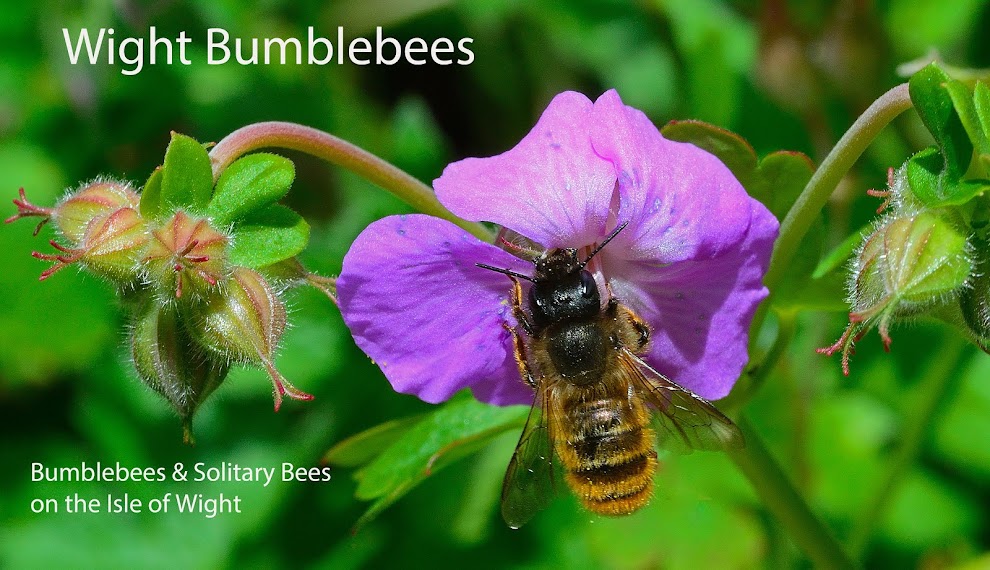
Title Photo

A male Red Mason Bee at Freshwater Bay.
Showing posts with label Oil Beetle. Show all posts

Tuesday, 30 March 2021

The Parasitic Species on our Coastal Cliffs.

The crumbling cliffs and resulting landslip habitat of our south-west coast is perhaps a stronghold in Southern England of two parasitic species of solitary bees. Firstly the large and flightless Oil Beetle, Meloe proscarabaeus.  Its lifestyle is referred to in my earlier post of the 30th April 2017 entitled  Oil Beetles.The second species is the Dotted Bee-fly Bombylius discolor. This bee-fly also has a strong connection with solitary bees and wasps. Its lifecycle is explained in my post of the 1st April 2016 Bombylius discolor.  

Both these  were encountered yesterday on the cliffs.


Sunday, 30 April 2017

Oil Beetles.

These large flightless beetles are dependent on the solitary bee to complete its lifecycle.The female will dig a nesting burrow close to a bee colony.The hatched larvae known as tringulins, will then climb up to reach flowers where their hook- like forelegs enable the larvae to attach themselves to visiting bees.The aim is to be taken by the bee to its nesting burrow where it feeds on the bees' egg and pollen store.Finally it pupates in the burrow over the winter and emerges as an adult beetle the following year.
Meloe proscarabaeus  or the Oil Beetle as it is commonly known gets this name by releasing a pungent oily liquid in defence when threatened.It is suffering a steady decline in population and is currently a BAP species(Biodiversity Action Plan).The female beetle is larger than the male and the following photo shows the difference in size of the sexes.