Title Photo

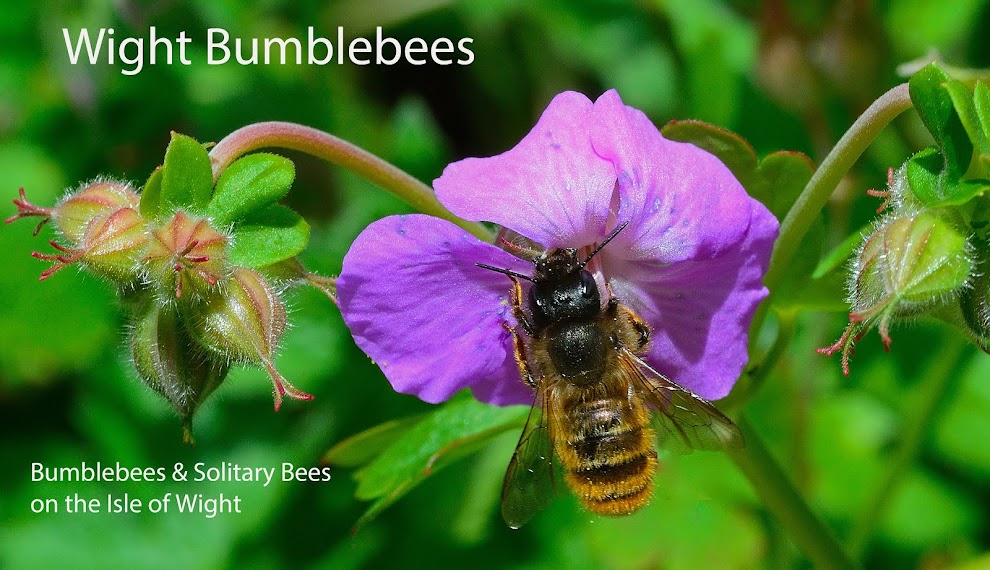
A male Red Mason Bee at Freshwater Bay.
Showing posts with label Yellow-legged Mining Bee. Show all posts

Saturday, 28 March 2020

Solitary Bees Busy on the Fruit Blossoms.

The few days of settled sunny weather has seen many bees out and about.In particular foraging solitary bees on the early flowering plants.Our plum tree is now in full bloom and female Yellow-legged Mining Bees Andrena flavipes,were busy gathering pollen,as seen below in the first two photos.The third individual is as yet unidentified.


Thursday, 26 April 2018

Nomada fucata (Painted Nomad Bee)

Nomada fucata is now widespread in southern England although it was once confined to the Dorset coast.Since the 1970's however this parasitic bee has spread its range to cover the area where its host Andrena flavipes, the Yellow-legged Mining Bee is found. This area covers all of southern England as far north as the Midlands, and south Wales. 


Wednesday, 11 April 2018

Spring Species Now Appearing.

Now that the temperatures are slowly on the way up and there is at last more in the way of sunshine an increasing number of springtime bees are to be seen in the garden.Yesterday this female Yellow-legged Mining Bee,Andrena flavipes, found a sunny spot on a bamboo leaf.This is a common solitary bee here at this time of year and is restricted to the south of Britain.
Also on show was a male Andrena bee of a species that I was unable to identify.


A male Andrena,species not known


Thursday, 14 April 2016

Andrena flavipes.

The Yellow-legged Mining Bee,Andrena flavipes is an early spring solitary bee as mentioned in a recent previous post.That post featured a male,however now that pollen rich flowers are available this female  was noticed enjoying the Spanish bluebells Hyacinthoides hispanica.


Tuesday, 22 March 2016

The Yellow-legged Mining Bee.

A common spring solitary bee is Andrena flavipes or the Yellow-legged Mining Bee.It is numerous in Southern England and I came across several individuals yesterday on south facing chalk cliffs. 
Andrena flavipes nests are constructed in the ground, and are often found in dense aggregations in suitable,exposed banks and cliffs, tended lawns, flower beds, roadside verges and in sparsely vegetated field margins.
In most areas where the bee is found, this Yellow-legged Mining Bee plays host to the cuckoo bee Nomada fucata.


.